








TL;DR
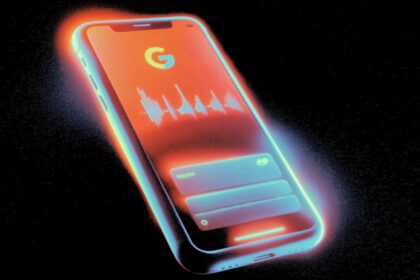
Google announced Tuesday May 19 at I/O 2026 that Search is moving from a list of links to an AI-powered experience built around conversational queries, autonomous information agents, and generative UI. As a result, the traditional ten blue links experience is over. The new search box rolls out this week. Generative UI and information agents launch this summer, free to everyone.
Meanwhile, the data is brutal. AI Overviews now serve 2.5 billion monthly users. Furthermore, Ahrefs measured a 58% CTR drop for top-ranking pages when an AI Overview appears. Additionally, Pew Research clocked organic CTR falling from 15% to 8% in AIO results. Seer Interactive measured organic CTR dropping to 0.6% with an AIO present versus 1.6% without. The Daily Mail reported desktop CTR collapsing from 25% to 2.79% on AIO queries.
For anyone running a content site, therefore, AEO and GEO stop being side projects. The metric isn’t position one anymore. Instead, it’s citation rate inside the AI engine doing the searching for the user. Reddit now drives 40% of citations across ChatGPT, Gemini, and Claude. Moreover, Perplexity cites content under 30 days old at an 82% rate. The strategy is no longer ranking. It’s being the source the AI quotes.
Best for publishers, content site operators, SEOs, and anyone whose business model depends on Google referrals. Not ideal for people who don’t run websites or care about traffic economics.
For 25 years the search box was the most valuable real estate on the internet. Type a thing, get a list of links, click one.
That just ended.
What Google Actually Announced
Google unveiled the overhaul Tuesday at I/O 2026, and Liz Reid, Head of Search, called it the biggest change to Search since the search box debuted in 2000. The new search box expands to handle long, conversational queries. Furthermore, AI suggests how to rephrase your question. Results are no longer a list. Instead, they’re interactive experiences generated on the fly, built by Gemini 3.5 Flash and Google’s Antigravity agentic platform.
Three new capabilities matter for publishers.
Information Agents
Starting this summer, you’ll be able to spin up multiple agents inside Search itself. They run 24/7 in the background. Specifically, they track stock movements, monitor competitors, watch for changes on specific topics, and send synthesized updates when conditions are met. Google Alerts launched in 2003. Information agents are Alerts grown up. Where Alerts emailed you when a keyword appeared, agents reason about whether the appearance matters and what to do about it.
Generative UI
Ask about black holes, get a custom interactive visualization. Then ask follow-ups, get a new visualization in response. Liz Reid called it “dynamic layouts, interactive visuals to persistent and stateful project spaces that you can return to again and again.” Translation: the search result is now a working app instead of a list of references.
Mini-Apps Inside Search
Users will build custom stateful experiences inside Search using natural language. For example, a meal planner that pulls from your calendar. Or a fitness app for your goals. As a result, Search becomes a no-code platform. Free for now. However, AI Pro and AI Ultra subscribers get it first.
Reid’s framing is the tell. From the TechCrunch piece: “Links will become an afterthought with the coming changes.” Not “we’re balancing AI with traditional results.” Afterthought. Consequently, the publisher relationship that built Google for 25 years just got demoted to legacy fallback.
The Numbers That Matter
Reid did not lead with traffic data. However, the numbers Google shared at I/O and the data publishers have collected over the last 18 months tell the actual story.
Reach Numbers From Google Itself
First, AI Overviews now serve more than 2.5 billion monthly users. Meanwhile, AI Mode, the conversational search experience launched last year, tops 1 billion monthly users. For comparison, ChatGPT sits at 900 million weekly active users per TechCrunch.
Additionally, AI Overviews now appear on roughly 48% of all Google search queries per theStacc’s April 2026 compilation citing Ahrefs and Semrush. That’s a 58% year-over-year increase in coverage. So if you publish anywhere in a competitive vertical, AI Overviews are showing up above your content close to half the time.
CTR Data From Independent Studies
Meanwhile, the CTR data is brutal and consistent across studies. Ahrefs analyzed 300,000 keywords and found a 58% lower average CTR for top-ranking pages when AI Overviews appear. Furthermore, Pew Research measured organic CTR dropping from 15% to 8% on AIO queries. Seer Interactive’s September 2025 data put organic CTR at 0.6% with an AIO versus 1.6% without. Authoritas also found the top organic link’s CTR drops by approximately 79% when AIO appears.
Real Publisher Numbers
Several specific publishers have published their data. For instance, The Daily Mail’s desktop CTR collapsed from 25.23% to 2.79% on AIO queries (-89%). Mobile traffic declined 87%. Similarly, Chegg reported a 49% non-subscriber traffic decline between January 2024 and January 2025 and filed an antitrust suit. Additionally, HubSpot lost an estimated 70-80% of organic traffic according to multiple industry analyses. CNN saw 27-38% organic decline. Press Gazette via Chartbeat data showed global publisher traffic from Google down a third year over year through November 2025, with US publishers down 38%. Consequently, NPR called it an “extinction-level event.”
Furthermore, the Reuters Institute 2026 survey of 280 media executives across 51 countries found news executives expect search referrals to drop another 43% over the next three years. Confidence in journalism as a profession dropped from 60% four years ago to 38% now.
This is not the early adjustment phase. Rather, this is the structural collapse of click-based publisher economics. The new I/O announcement is the part where Google admits it.
How AI Engines Actually Pick Citations
Most publisher SEO advice from 2023 doesn’t survive contact with how AI engines source content in 2026. The mechanics changed.
Each Engine Cites Differently
First, each AI engine cites differently. Per Leapd’s analysis of 680 million citations across ChatGPT, Google AI Overviews, and Perplexity, only 11% of domains are cited by both ChatGPT and Perplexity. Additionally, a separate 2026 study of 34,234 AI responses found a 46x difference in brand citation rates between platforms. ChatGPT cited brands 0.59% of the time. Perplexity sat at 13.05%. Grok at 27%. Consequently, optimizing for “AI search” as a single category is like running the same campaign on LinkedIn and TikTok.
Reddit Dominates Citations
Meanwhile, Reddit is now the dominant citation source. Per the 2026 AI Platform Citation Index, Reddit accounts for roughly 40% of AI citations across ChatGPT, Gemini, and Claude. On Perplexity specifically, 24% of all citations in January 2026 came from Reddit alone. Furthermore, Reddit accounted for 44% of Google AI Overviews social citations. On ChatGPT, Reddit is the #2 most-cited domain behind only Wikipedia.
Citation Concentration And Volatility
Additionally, the top 15 domains hold 68% of citation share. Citation concentration is at an all-time high. PageRank distributions were never this skewed. Moreover, a single algorithm tweak can shift citation shares by 50% in under a month per 5WPR’s 2026 Citation Index. The volatility is measured in weeks, not years.
Freshness Drives Perplexity Especially
Furthermore, freshness drives Perplexity citations heavily. Perplexity cites content published within the last 30 days at an 82% rate per Leapd. It also averages 21.87 citations per response, the highest of any major AI platform. There is no knowledge cutoff. Consequently, new content can be cited within hours of being indexed. Perplexity also prefers content under 12 months old, and AI Overviews show roughly 30% higher citation rates for pages with current-year signals like “2026” in titles and headings.
Consensus Signals Beat Rankings
Additionally, consensus signals matter more than rankings now. Per research from Profound and SEMrush, AI platforms scan for agreement across multiple independent sources before confidently citing a brand. So if your product appears across Reddit threads, YouTube tutorials, G2 reviews, and your own site with similar positioning, AI systems gain confidence in recommending you. However, if you only exist on your own site with no external validation, AI systems treat your claims with skepticism. The new game is third-party reinforcement, not first-party authority.
Citation Churn Is High
Finally, citation churn is high. Authoritas found that roughly 70% of pages cited in AI Overviews change over a 2-3 month period. Citation changes were not linked to traditional organic rankings. Translation: getting cited once is not durable. You have to keep earning it.
What This Means For VU And Everyone Else
The strategic shift is uncomfortable for anyone who built a site on classic SEO. Three things change immediately.
Position One Stops Being The Goal
First, position one in the SERP stops mattering. Position one doesn’t matter if nobody scrolls past the AI Overview. So the new goal is citation inside the AI answer itself. Different optimization. Different content structure. Different success metric. We’ve been building this muscle on VU through the AEO field guide, but the I/O announcement is the moment AEO becomes the primary discipline rather than a supplemental one.
The Traffic Mix Flips
Second, the traffic mix flips. What you get from Google is no longer ten blue links to your homepage. Instead, it’s a citation inside an AI answer. The user might click for depth. They might not. Consequently, articles now need to do two jobs at once. Be citable enough that the AI quotes you. Be interesting enough that the human clicks through anyway.
Your Content Becomes Raw Material
Third, your content becomes raw material for someone else’s product. Information agents pull from your site to feed user dashboards. Mini-apps use your data inside Google-owned interfaces. As a result, the click-through rate on that arrangement is whatever Google decides it is. On mini-apps it’s likely zero because the user never sees a source list, they see a working app.
The AEO/GEO Playbook That Actually Moves Citations
This is the section worth bookmarking. Six tactics that show up across the citation research as the actual levers.
Tactic One: Get On Reddit, Properly
First, Reddit is the single highest-leverage AEO surface in 2026. Per the citation index data, your brand appearing in a Reddit thread with detailed first-hand experience is worth more than 50 backlinks. So pick 3-5 subreddits where your buyers ask questions. Then comment substantively without links for 90 days to build sub-specific karma. After karma threshold, drop linked answers in threads where the link adds real value. We’ve been running this protocol on u/virtualunc and the citation lift is measurable. However, the mistake most brands make is treating Reddit as a marketing channel. AI engines penalize promotional patterns. Instead, the signal that gets cited is one detailed comment from someone who clearly used the thing.
Tactic Two: Build Third-Party Signals
Second, build third-party signals across G2, Trustpilot, Reddit, YouTube, and industry publications. AI platforms scan for cross-source consensus. So if your tool is reviewed on G2, mentioned on Reddit, covered in a YouTube tutorial, and written about on independent sites, the AI gains confidence and cites you. However, if you only exist on your own marketing site, you get filtered out. The score that matters is not Domain Rating. Rather, it’s citation surface area across third-party platforms.
Tactic Three: Original Hands-On Data
Third, original hands-on data with verifiable specifics. AI engines preferentially cite sources that include things the training data doesn’t have. Real benchmarks. Real screenshots. Real install walkthroughs. Real error logs. Actual numbers from your own testing. The model knows what the official docs say. Instead, it’s looking for what someone learned doing the thing. The OpenClaw complete guide is the closest VU has to a citation-ready template. Step-by-step install with real outputs. Custom scripts published and linked. Methodology section. Author bio with credentials. Consequently, the pattern works.
Tactic Four: Structured Citability
Fourth, structured citability through schema and llms.txt. Schema markup. FAQPage schema. Article schema with dateModified. Organization schema with sameAs links. Dataset schema for any structured data you publish. Additionally, an llms.txt file at root telling AI crawlers what your site is and which URLs matter most. Most of this is technical and one-time. However, most sites haven’t done it. Per the citation research, only 4 schema types move the needle: FAQ, Article, Organization, and HowTo. So implement those first, ignore the rest.
Tactic Five: Freshness Signals
Fifth, freshness signals that trigger Perplexity’s 82% rate on under-30-day content. Date pages clearly. Use current-year signals in titles where accurate. Furthermore, update existing pillar pages quarterly with new sections, new screenshots, and a visible “Last updated” timestamp. AI engines weight freshness heavily because they’re trying to avoid citing outdated info that embarrasses them. Consequently, a page with “Last updated May 2026” outranks a page with no date even if the older page is technically better.
Tactic Six: Track Citations Weekly
Finally, track AI citations weekly, not monthly. Citation volatility is measured in weeks. Tools to use: Profound, Frase AI Visibility, Ahrefs Brand Radar, Amplitude AI Visibility, Otterly. Then run a fixed list of 15-20 buyer-intent queries weekly across ChatGPT, Perplexity, Claude, Gemini, and Google AI Overviews. Record citation appearances. Track which week you got cited, which week a competitor replaced you, and which Reddit threads correlate with citation spikes. Without this you’re flying blind on the only metric that matters.
What Doesn’t Work Anymore
Meanwhile, what doesn’t work anymore is generic synthesis content. “10 best AI tools 2026” listicles. “Everything you need to know about MCP” explainers without hands-on testing. Year-stamped roundups copied from other year-stamped roundups. AI engines train on these already. Consequently, they don’t cite another version of what they’ve absorbed a thousand times. Instead, they cite the thing that wasn’t in their training data.
What To Watch Over The Next 12 Months
Generative UI lands this summer. Information agents launch then too. Additionally, AI Pro and AI Ultra get the mini-app builder first. Free tier gets agents and gen UI but pays for advanced features through subscription.
Three things to watch.
Publisher Referral Data Through Q3 And Q4
First, the publisher referral data through Q3 and Q4 2026. Existing data shows declines of 18-89% depending on study methodology, query type, and publisher size. The next two quarters will quantify whether generative UI and information agents accelerate the curve. The bear case is publisher referrals from Google drop another 30-40% by end of year as users adopt the new interfaces. However, the base case is they keep declining at roughly the current rate, which is already an extinction-level event for most ad-supported publishers.
Which Sites Survive
Second, which sites survive the transition. The pattern emerging is direct audience plus original data. For example, newsletter-first publishers like Stratechery, Pragmatic Engineer, Platformer, The Rundown AI. They built the email list before they needed it. So their traffic doesn’t depend on Google referral velocity. Meanwhile, anyone running a content site that depends on organic Google for 60%+ of visits is at structural risk. The work this quarter is shifting that mix.
Citation Click-Through Rate
Third, click-through rate on AI citations themselves. Right now citation CTR is poor but measurable. However, if Google’s mini-app builder takes off, citation CTR drops to essentially zero on mini-app surfaces because the user never sees a source list. That’s the next leg down for publisher economics if it lands. The number to watch is what fraction of AI Overview impressions produce a citation click, broken out by query type. We should have that data by year-end.
The piece nobody is saying directly is that Google is no longer a search engine. Rather, it’s an AI platform that surfaces other people’s content only when it can’t generate the answer itself. The search box is becoming a chat interface to that platform. The blue links are becoming citations on the bottom of an answer. Furthermore, the publisher relationship is becoming a sourcing contract Google didn’t sign and won’t honor when the AI is good enough to skip the source entirely.
Twenty-five years from the original search box to this. The next twenty-five are not going to look like the first.