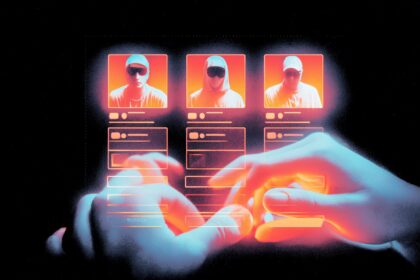








Apple sues OpenAI, and the Friday filing is wilder than the headline. Apple alleges OpenAI hardware chief Tang Tan, a 24 year Apple veteran who designed the iPhone, told candidates still employed at Apple to bring “actual parts” like batteries and logic boards to interviews for “show and tell” sessions. Another hire allegedly kept his Apple laptop and downloaded dozens of confidential files, and a supplier was tricked into demonstrating a secret metal finishing technique. Apple says a February warning letter went unanswered. The suit names OpenAI, io Products, Tan, and engineer Chang Liu, seeking damages and an injunction, right as OpenAI preps a historic IPO and its first hardware device. Best for: understanding the biggest tech legal fight of 2026. Not ideal for: anyone who thought the Apple OpenAI partnership was going fine.
Your job interview: tell me about a time you overcame a challenge.
The job interviews described in Apple’s new lawsuit: bring physical hardware from your current employer’s secret projects, and we’ll pass it around the room.
On Friday afternoon, Apple sued OpenAI in federal court, and the complaint does something legal filings almost never do. It entertains. Apple describes a scheme running “at every level” of OpenAI, and sums up the company’s hardware business with a phrase you don’t forget: rotten to its core.
Two years ago these companies announced a partnership on stage. Now one is accusing the other of industrial espionage with a careers page.
Apple Sues OpenAI: What the Filing Actually Says
Strip the legal language and the story Apple tells is simple. OpenAI decided to build consumer hardware. It bought Jony Ive’s startup io Products for roughly $6.5 billion, then staffed the effort with Apple veterans. Over 400 former Apple employees now work at OpenAI, according to the complaint.
Hiring your rival’s people is legal. After all, Silicon Valley runs on it. Apple’s argument, as TechCrunch reports, is that OpenAI went far past hiring. It allegedly directed those people to carry Apple’s confidential information out the door with them. In some cases, allegedly, Apple’s physical components too.
Meanwhile, the named defendants tell you where Apple is aiming. OpenAI itself. io Products, the hardware subsidiary. Tang Tan, OpenAI’s Chief Hardware Officer, who spent 24 years at Apple designing the iPhone and Apple Watch. And Chang Liu, a senior systems electrical engineer with eight years at Apple, who joined OpenAI this January.
One name is conspicuously absent: Jony Ive. Apple’s most famous alumnus leads OpenAI’s device work and co-founded io with Tan, yet he appears nowhere as a defendant. Whether that’s evidence, strategy, or courtesy is anyone’s guess.
The Show and Tell Sessions
The allegation everyone will remember involves the interviews.
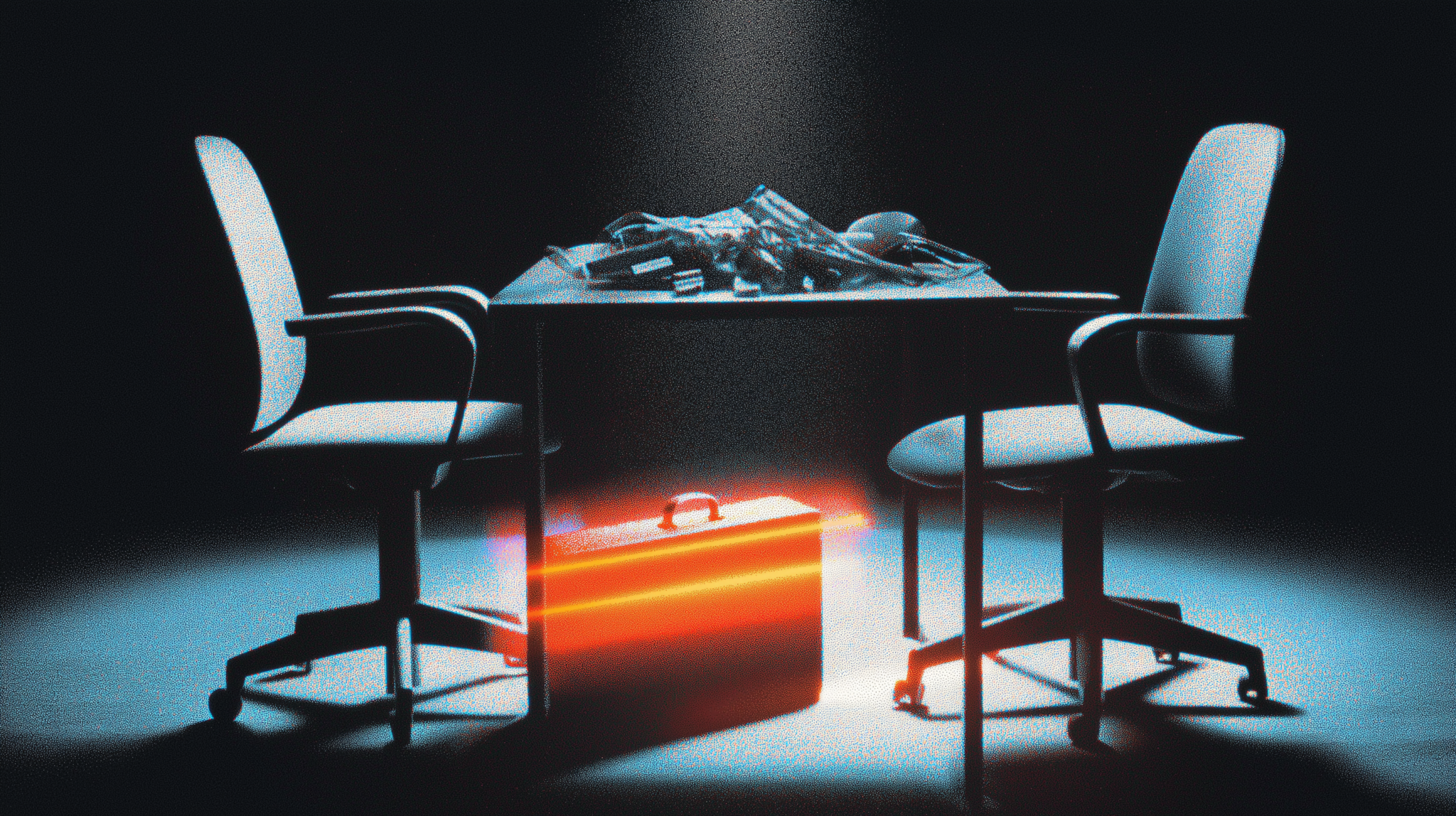
According to the filing, Tan directed candidates who still worked at Apple to bring “actual parts” to their OpenAI interviews. Batteries. Logic boards. SIPs. The complaint says these became “show and tell” sessions. Tan’s team could then extract even more confidential detail from the hardware and the person carrying it.
At least one candidate was reportedly surprised by the request. He commented that he didn’t even know those components could leave the office. (They can’t. That’s rather the point of the lawsuit.)
The complaint goes deeper on the interview playbook. OpenAI allegedly asked candidates to bring CAD files, design artifacts, and prototypes. Recruits were pushed to walk through their subsystem choices, simulation tools, and vendor selections. Tan is accused of dropping Apple’s internal project codenames into conversations to loosen up recruits. At one point he allegedly used a codename to ask what the plan was for an unannounced Apple product.
The Exit Playbook
Then there’s the exit strategy. Apple alleges Tan retained or obtained an internal Apple managers’ document marked “Need to Know.” It describes the company’s security procedures for departing employees. Messages on Apple issued devices, the filing says, show Tan and colleagues sharing that document with new hires before they resigned. The recruits got a preview of exactly which checks to expect. They were also allegedly coached not to name OpenAI as their destination, to avoid what the filing calls the “dreaded walk out” and keep their Apple access for a standard two weeks. One more instruction, per the complaint: sign nothing at the exit interview, and if Apple asks you to, tell OpenAI “asap.”
Read that sequence back. If Apple proves it, this wasn’t leakage. It was logistics.
One more wrinkle makes the alleged interview requests worse than careless. Apple runs some of the strictest internal security in consumer tech, with hardware access compartmentalized on a need to know basis even between its own teams. Employees know components don’t leave. Which means, if the filing is accurate, everyone in those rooms understood what crossing that line meant.
Who Tang Tan Is, and Why This Stings
To understand why Apple sues OpenAI with this much venom, look at who Tan was.
First, twenty four years inside Apple. Then VP of product design for the iPhone and Apple Watch, the two most profitable consumer products in history. He left in February 2024 to work with Jony Ive and co-founded io Products alongside him, Evans Hankey (who ran Apple’s design team after Ive left), and fellow Apple alum Scott Cannon. When OpenAI’s $6.5 billion acquisition of io closed, Tan became Chief Hardware Officer. Of that founding group, only Tan is a defendant.
The complaint alleges the trouble started before he even left: Tan reportedly emailed himself confidential Apple supplier information and internal industry summaries on his way out the door. And this isn’t his first appearance in a trade secret fight. A startup called iyO already added theft claims against Tan personally in its separate lawsuit over OpenAI’s device work.
Apple trained the man for a quarter century, watched him leave with its design DNA, then watched him allegedly build a recruiting pipeline back into the building. The lawsuit reads less like a legal document and more like a betrayal with exhibits.
The Laptop That Never Came Home
The Chang Liu allegations are a different flavor of bad.
Apple says Liu kept his company issued laptop after leaving for OpenAI in January. Then, per the complaint, he exploited an authentication bug to get back into Apple’s internal network. He allegedly downloaded dozens of confidential hardware files: technical specifications, engineering presentations, and proprietary project data on unannounced products.
The complaint quotes his reaction on discovering the access still worked: “LOL,” it was “so funny.” A colleague still at Apple replied, “I’m ready.” Federal exhibits rarely come with their own laugh track.
He’s also accused of sharing Apple confidential information with that colleague and coaching her on avoiding the security team while copying files. He even allegedly moved their conversations to a separate messaging app to dodge detection. Which, if true, means the alleged pipeline was self sustaining: each wave of hires prepping the next.
As a result, Apple is suing both Tan and Liu individually for breach of contract on top of the trade secret claims against OpenAI. The employees who allegedly carried the information are on the hook next to the company that allegedly received it.
They Allegedly Fooled Apple’s Own Suppliers
Meanwhile, the strangest section of the complaint leaves OpenAI’s offices entirely. Context makes it worse: OpenAI already partnered with Foxconn, Apple’s own iPhone assembler, and engaged established Apple suppliers Luxshare and Goertek for components. The two companies aren’t just fighting over people. They share a supply chain.
Apple alleges OpenAI approached its trusted manufacturing partners while armed with Apple confidential information. In one case, the filing claims, OpenAI had a partner perform Apple’s proprietary metal finishing technique for an OpenAI device. The partner was allegedly misled into believing Apple had given permission. A second longtime supplier, one that works on power and battery manufacturing, allegedly got targeted questions about specific Apple components. The questions were built on insider terminology.
Understand what manufacturing secrets mean to Apple. Design, for example, can be imitated from the outside; anyone can buy an iPhone and take calipers to it. The processes that produce it at scale, the finishing techniques, the vendor relationships, the yield tricks earned over decades, live nowhere except inside Apple and its supplier network. That’s the company’s deepest moat. The complaint alleges OpenAI reached directly into it.
This is the part that should worry OpenAI most. Interview banter is deniable. A supplier running a trade secret manufacturing process for the wrong customer leaves records: purchase orders, emails, tooling, invoices. Discovery in this case is going to be a bonfire, and Apple already called the current allegations the tip of the iceberg.
A Letter in February, Silence Ever Since
Apple didn’t start with a lawsuit. By its own account, it sent OpenAI a letter in February raising concerns and asking the company to investigate.
OpenAI never responded, the complaint says. Five months later, Apple filed.
That silence is doing quiet legal work. Trade secret law rewards companies that act promptly to protect their information, and the letter timestamps exactly when Apple raised the alarm. It also strips OpenAI of the we had no idea defense. Whatever was happening after February was happening after formal notice, and the complaint frames the months in between as an investigation that kept turning up more, not less. Apple even hints its visibility stops at its own walls, which is lawyer speak for wait until discovery.
The public response finally arrived Friday, through spokesperson Drew Pusateri. OpenAI, he said, has no interest in other companies’ trade secrets and remains focused on building technology that empowers people. That’s the entire defense so far, offered against a complaint that runs through named executives, quoted messages, and physical components.
Apple also pre-empted the obvious counterargument. Poaching talent is fine, the filing concedes. But employing people once trusted with Apple’s secrets does not entitle OpenAI to use those secrets to jumpstart a hardware division. That line is the whole case. The 400 hires aren’t the crime. What allegedly traveled with them is.
The Partnership That’s Somehow Still Running
Here’s the detail that makes this lawsuit surreal: ChatGPT is inside Apple’s operating systems right now.
The 2024 partnership that integrated ChatGPT into Apple Intelligence remains live while Apple’s lawyers call OpenAI’s hardware business rotten. Apple declined to say whether the suit affects the deal, and the complaint explicitly states the partnership agreement isn’t at issue. Both companies are pretending the marriage and the litigation live in separate houses.
The relationship was already cooling in public view. We covered Apple opening Siri to rival AI models back when iOS 27 cracked the door open. The fall version of Siri now runs on Google’s Gemini rather than OpenAI’s models, per CNBC. Bloomberg reported earlier this year that OpenAI was preparing legal action against Apple over how that partnership played out. Apple simply got to the courthouse first, and with much better material.
The Worst Possible Week for This to Land
Timing turns this from a big lawsuit into a dangerous one.
OpenAI is preparing what’s expected to be a historic IPO, a story we’ve been tracking since the IPO plans first surfaced. Pre IPO companies need clean risk disclosures. “Our hardware division is accused of being built on stolen trade secrets” is the kind of sentence that gets its own section in a prospectus. Two months ago OpenAI won its high profile trial against Elon Musk. The legal calendar didn’t stay clear for long.
At the same time, the hardware stakes are just as brutal. OpenAI’s chief global affairs officer promised a device in the first half of 2026, a window that closes in three weeks. Sam Altman said prototypes were finished back in November. Apple is now asking a court for an injunction blocking OpenAI from using its trade secrets. It also wants confidential materials returned and damages set at trial. If any piece of the device’s design or manufacturing chain traces back to what Apple describes, an injunction doesn’t delay the launch. It detonates it.
And all of this arrived 48 hours after OpenAI’s triumphant ChatGPT Work launch, which we broke down in our ChatGPT Work vs Claude Cowork comparison. Thursday, the company announced its super app. Friday, it read about itself in a federal complaint.
What This Means for You
A lawsuit between two trillion dollar egos still lands on regular people in a few ways.
The mystery OpenAI device you keep hearing about just got riskier. Reporting has pointed at everything from a smartphone in 2028 to a HomePod style speaker, and prototypes were reportedly finished in November. If the courts find Apple trade secrets in the supply chain, that gadget’s timeline, price, and existence are all in play. Anyone waiting to see what a post iPhone AI device looks like might be waiting through a docket.
Meanwhile, your iPhone’s AI features sit in an awkward spot. ChatGPT remains integrated into Apple Intelligence today, while the new Siri quietly shifts to Gemini this fall. Apple sues OpenAI on Friday, ships OpenAI’s product on Monday, and replaces it by October. Nothing about your phone breaks tomorrow, but the direction is unmistakable: Apple is untangling itself.
And if you work in tech, this case will echo through every exit interview for years. The era of casually walking know-how between rivals just acquired a very expensive cautionary tale.
What Happens Next
Trade secret cases move slowly and settle often, so temper the popcorn expectations. Apple wants a jury trial, damages, an injunction, and evidence preservation. OpenAI will move to dismiss, discovery will grind, and the realistic timeline runs years, not months.
Apple also has a habit of following through. Last summer, for instance, it sued leaker Jon Prosser over trade secrets last summer and pursued that case into default judgments and document fights. This company litigates leaks about lock screens. A rival allegedly walking off with its hardware playbook is not something it settles quietly on principle, though the money involved means a settlement can never be ruled out.
Discovery Is the Real Fight
The early skirmishes will be procedural and boring. The interesting phase is discovery, where both sides pry open the other’s internal communications under oath. Apple gets to dig through OpenAI’s hardware program. OpenAI gets to probe how Apple gathered messages off employees’ work devices. Two companies allergic to transparency are about to trade subpoenas.
But three things make this one worth watching closely. Discovery cuts both ways into two of the most secretive companies on earth. Apple has already signaled it believes far more is buried. The injunction request hangs directly over an unlaunched device with a promised ship date. And unlike most corporate spats, this one has physical evidence at its center: laptops, components, supplier tooling, and documents with names on them.
Apple sues OpenAI is the headline. The subtext is bigger. The AI industry spent two years treating talent raids on Apple as a scoreboard stat. Proof, supposedly, that the old giant was losing the future. Apple just reframed every one of those hires as a potential exhibit.
The companies that trained machines on everyone else’s work will now spend years in court arguing over what their people were allowed to carry in their heads. The machines never needed a duffel bag.