

Two years ago the hottest thing in productivity was connecting your apps with automation tools. Zapier this, Make.com that. If this then that. Everyone was building workflows and feeling like they’d discovered a superpower.
That era isn’t over but it’s changing fast. The next wave isn’t about connecting apps in sequences. It’s about AI agents that decide what to do, execute across multiple systems, and handle the kind of complexity that used to require a human in the loop.
The workflow stack you spent months building might be getting replaced by something that doesn’t need workflows at all.
What an AI Agent Actually Does Differently
Traditional automation is reactive and rule-based. You define the trigger. You define the actions. You define every condition. The automation follows the script exactly, every time, regardless of context. It’s powerful but brittle. Change one thing in one connected app and the whole workflow can break.
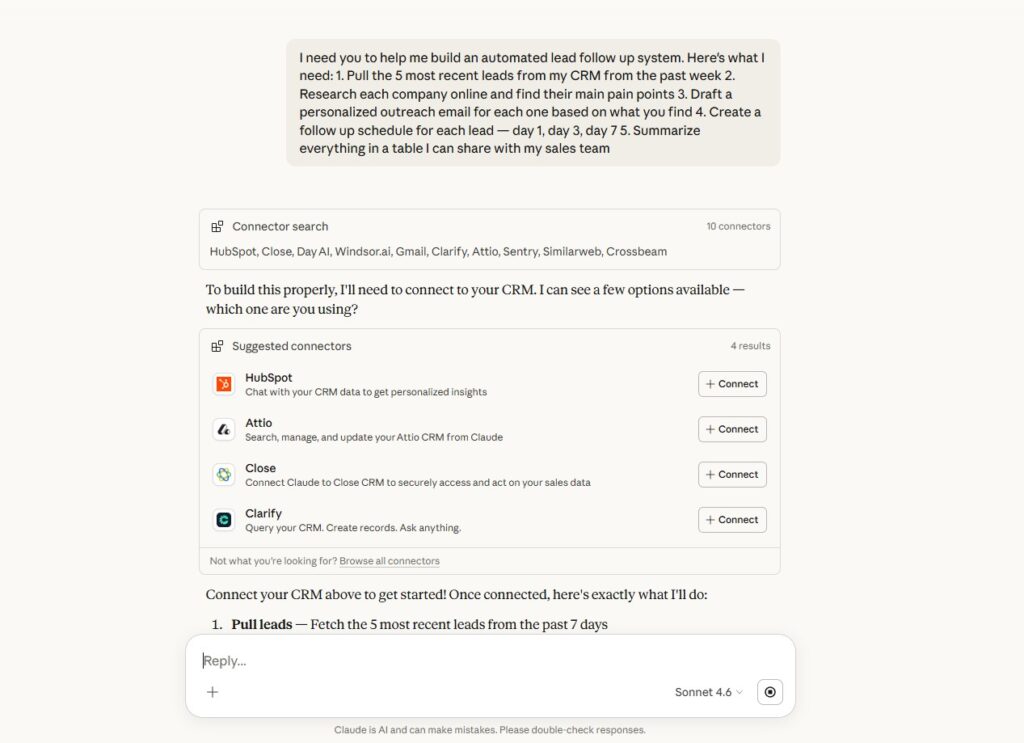
An AI agent is different in a fundamental way. You give it a goal, not a script. Find the three highest value leads in my CRM from the past week, research each company, draft personalized outreach emails based on what you find, add them to a follow up sequence, and notify me when it’s done. That’s one instruction to an agent. In a traditional automation stack that’s five separate workflows, multiple conditional branches, and probably two hours of setup.
The agent figures out how to do it. It decides which tools to use, in what order, based on what it finds along the way. It adapts when something unexpected happens instead of failing silently.
The Tools Leading This Shift
OpenClaw is the most talked about right now and we’ve covered it in depth already on VirtualUncle. It’s open source, runs locally, and can be connected to your email, calendar, files, and browser to execute tasks autonomously. The security considerations are real and it’s not ready for everyone, but the capability is genuine.
Beyond OpenClaw, every major AI company is building in this direction. Anthropic released Claude’s computer use capability allowing it to operate software directly. OpenAI’s GPT-5.4 has native computer use through Codex. Google’s Gemini is being integrated across Workspace with agent-like capabilities. Microsoft launched Copilot Cowork specifically to compete in the AI agent category.
This isn’t a fringe trend. Every major player is betting that autonomous AI agents become the primary way knowledge workers get things done.
What Happens to Your Automation Stack
The honest answer is that traditional automation tools aren’t going away. Make.com, Zapier, and n8n still have a role to play because AI agents need structured integrations to operate on. An agent that needs to update your CRM still needs a connection to your CRM. The plumbing still matters.
But the nature of what automation tools are for is shifting. Instead of building detailed workflow scripts for every scenario, you’ll increasingly be setting up the infrastructure that agents operate on top of. The agent decides what to do. The automation tool provides the connections to make it happen.
Think of it this way. Right now you might spend two hours building a Zapier workflow to handle a specific lead routing scenario. In 18 months you might instead spend 20 minutes telling an agent what your lead routing logic is and letting it figure out the implementation. The automation tool is still involved but your role in the process is fundamentally different.
The Part Nobody Wants to Talk About
If AI agents can execute complex multi-step tasks autonomously, the logical extension of that is that a lot of the work people currently do to set up and manage automation stacks becomes unnecessary.
The automation consultant who charges $150 an hour to build Make.com workflows is going to face pressure from agents that can build those workflows themselves. The operations manager who spends half their week maintaining and fixing workflow automations is going to find that AI agents handle more of that maintenance automatically.
This isn’t hypothetical. It’s already happening at the edges. The question isn’t whether it affects your work. It’s how fast and what you do between now and then.
The people who are going to navigate this well are the ones who understand both layers. The automation infrastructure layer — how the tools connect, how data flows, how to set up reliable integrations — and the agent layer above it — how to give agents good instructions, how to evaluate their outputs, how to know when something went wrong.
Neither layer is going away. Both are changing fast. The advantage goes to whoever understands both.
Where to Start
If you haven’t experimented with AI agents yet, start with the ones that have the lowest barrier to entry and the clearest use cases.
Claude’s Projects feature lets you give Claude persistent context about your work and have it complete multi-step research and writing tasks autonomously. It’s not a full agent in the OpenClaw sense but it gives you a feel for how goal-directed AI works differently from prompt and response.
Anthropic’s Claude computer use, available through the API, lets Claude operate software directly on your behalf. If you’re technical enough to access it, it’s worth experimenting with now.
OpenClaw is worth following even if you’re not ready to install it. The development pace is fast, the security situation is improving, and browser-based versions like ByteDance’s ArkClaw are already making it more accessible. In six months the barrier to entry will be significantly lower than it is today.
The automation era isn’t ending. It’s upgrading. The people who understand where it’s going are going to have a significant advantage over the ones who are still building the same Zaps they were building two years ago.